In pharmaceutical manufacturing, time is more than a project milestone. Delays in facility development can affect operational readiness, regulatory timelines, and ultimately, the availability of medicines. How can pharmaceutical manufacturers reduce these risks while maintaining the highest standards of quality and compliance?
When a Construction Delay Becomes a Business Challenge
Developing a pharmaceutical manufacturing facility is a complex process involving multiple stakeholders, strict regulatory requirements, and carefully coordinated activities.
From initial design and engineering to construction, equipment installation, commissioning, qualification, and validation, each phase depends on the successful completion of preceding activities.
When one stage is delayed, the consequences can extend far beyond the construction schedule.
A postponed cleanroom installation, for example, may delay the installation of manufacturing equipment, affect qualification activities, and push back the planned start of production. What initially appears to be a relatively minor scheduling issue can quickly become a much larger operational and financial challenge.
Understanding these interconnected risks is essential for pharmaceutical manufacturers seeking to deliver new facilities or expand existing production capacity.
The Hidden Costs of Project Delays
While additional construction expenses are often the most visible consequence of delays, they represent only part of the overall impact.
1. Increased project costs
Extended project timelines can result in additional labour expenses, prolonged equipment rental, increased site management costs, and the need to reschedule subcontractors.
Unexpected changes may also require additional coordination, engineering adjustments, or modifications to previously completed work.
2. Delayed commissioning and qualification
Pharmaceutical facilities must undergo rigorous commissioning and qualification activities before they can be used for their intended manufacturing operations.
When construction or cleanroom installation falls behind schedule, these activities may also need to be postponed.
This can affect the availability of validation teams, testing resources, and other specialists whose work has been planned around specific project milestones.
3. Disruption to operational planning
Manufacturing organisations often plan equipment deliveries, recruitment, training, and production schedules well in advance.
Delays in facility readiness can disrupt these arrangements, potentially resulting in idle resources, additional storage requirements, and changes to operational plans.
4. Extended time to market
For pharmaceutical manufacturers preparing to introduce new products or expand production capacity, delays in facility readiness can affect commercial timelines.
A later production start may postpone product availability, delay expected revenue, or create challenges in meeting market demand.
In certain circumstances, these delays can also affect the timely availability of medicines for patients.
Why Traditional Construction Approaches Can Increase Scheduling Risks
Conventional facility construction often involves numerous activities taking place sequentially on-site.
Building works, cleanroom installation, technical systems integration, and finishing activities may depend heavily on the progress of other contractors.
This creates potential scheduling challenges, particularly when unexpected site conditions, material delivery issues, or design changes occur.
In addition, pharmaceutical facilities require careful coordination between construction teams, engineering specialists, equipment suppliers, and quality representatives.
Without early alignment between these stakeholders, issues identified during later project stages can lead to costly modifications and schedule extensions.
Reducing these risks requires more than accelerating construction activities. It requires a delivery strategy that considers the entire facility lifecycle from the earliest planning stages.
How Can Pharmaceutical Manufacturers Reduce Project Delays?
1. Prioritise Early Planning and Design Coordination
One of the most effective ways to reduce project risks is to identify potential challenges before construction begins.
Early collaboration between facility designers, cleanroom specialists, engineering teams, and end users helps ensure that technical requirements are clearly understood.
This includes defining cleanroom classifications, environmental conditions, equipment interfaces, utility requirements, and operational workflows.
Addressing these considerations during the design phase can reduce the likelihood of late-stage modifications and support smoother project execution.
2. Improve Coordination Across Project Phases
Successful pharmaceutical facility delivery depends on effective communication between all parties involved.
Clear responsibilities, realistic scheduling, and regular progress reviews help identify potential conflicts before they affect critical project milestones.
Particular attention should be given to the interfaces between cleanroom construction, mechanical and electrical systems, equipment installation, and qualification activities.
A coordinated approach enables project teams to anticipate dependencies and respond to emerging challenges more effectively.
3. Consider Off-Site Manufacturing and Modular Cleanroom Solutions
Off-site manufacturing offers an alternative approach to traditional on-site cleanroom construction.
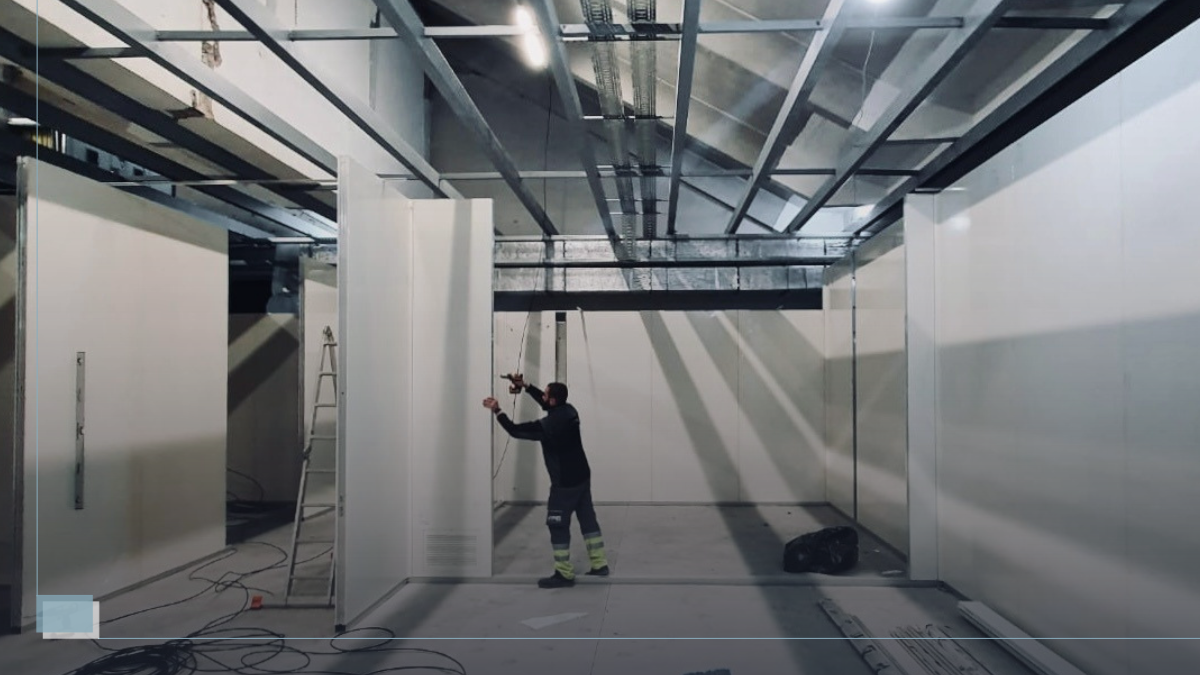
By manufacturing cleanroom components or complete modular units in a controlled factory environment, certain activities can take place in parallel with site preparation.
This approach can offer several advantages:
- Greater schedule predictability: Factory-based manufacturing reduces exposure to some on-site disruptions and allows production activities to follow controlled processes.
- Parallel project activities: Site preparation and cleanroom manufacturing can progress simultaneously, potentially reducing the overall project timeline.
- Improved quality control: Manufacturing in a controlled environment supports consistent production conditions, systematic inspections, and documented quality checks.
- Reduced on-site complexity: Prefabricated solutions can reduce the amount of installation work required at the final location.
- Earlier identification of technical issues: Factory Acceptance Testing (FAT), where applicable, can help identify and resolve certain issues before delivery to the site.
While modular construction does not eliminate all project risks, it can provide greater control over key activities and reduce dependencies associated with conventional on-site construction.
The extent of these benefits depends on the facility design, project scope, logistics, and level of prefabrication.
4. Integrate Quality and Compliance Considerations from the Beginning
In pharmaceutical manufacturing, project speed must never come at the expense of quality or regulatory compliance.
GMP requirements, contamination control principles, qualification needs, and documentation expectations should be considered throughout the design and delivery process.
Early involvement of quality and validation teams helps ensure that facility design and construction decisions support subsequent commissioning, qualification, and operational readiness.
A well-planned approach can also reduce the risk of discovering compliance-related issues during the final stages of a project.
The Role of Modular Cleanroom Solutions in Predictable Project Delivery
At NAYA Life Sciences, we recognise that pharmaceutical manufacturers need facilities that meet demanding technical and regulatory requirements while supporting reliable project execution.
Our modular cleanroom solutions combine off-site manufacturing with coordinated engineering, production, and installation processes.
By manufacturing cleanroom solutions in a controlled production environment, we aim to reduce on-site complexity, support consistent quality, and improve coordination between project phases.
Depending on project requirements, modular solutions can also offer flexibility for future modifications, expansions, or changing manufacturing needs.
This approach is particularly relevant for pharmaceutical companies seeking to expand production capacity, introduce new manufacturing processes, or upgrade existing facilities while managing operational disruption.
Beyond Construction: Delivering Long-Term Value
In pharmaceutical facility development, delays rarely remain isolated to the construction schedule. Their effects can extend across budgets, operational planning, regulatory readiness, and manufacturing timelines.
As pharmaceutical manufacturing becomes increasingly complex and production requirements continue to evolve, the ability to deliver facilities predictably is an important competitive consideration.
Reducing project risk is not simply about working faster. It is about making informed decisions earlier, coordinating activities more effectively, and choosing delivery approaches that support both quality and schedule reliability.
Because in pharmaceutical manufacturing, delivering a facility on time is not just a construction achievement. It is an important step towards bringing medicines to the patients who need them.