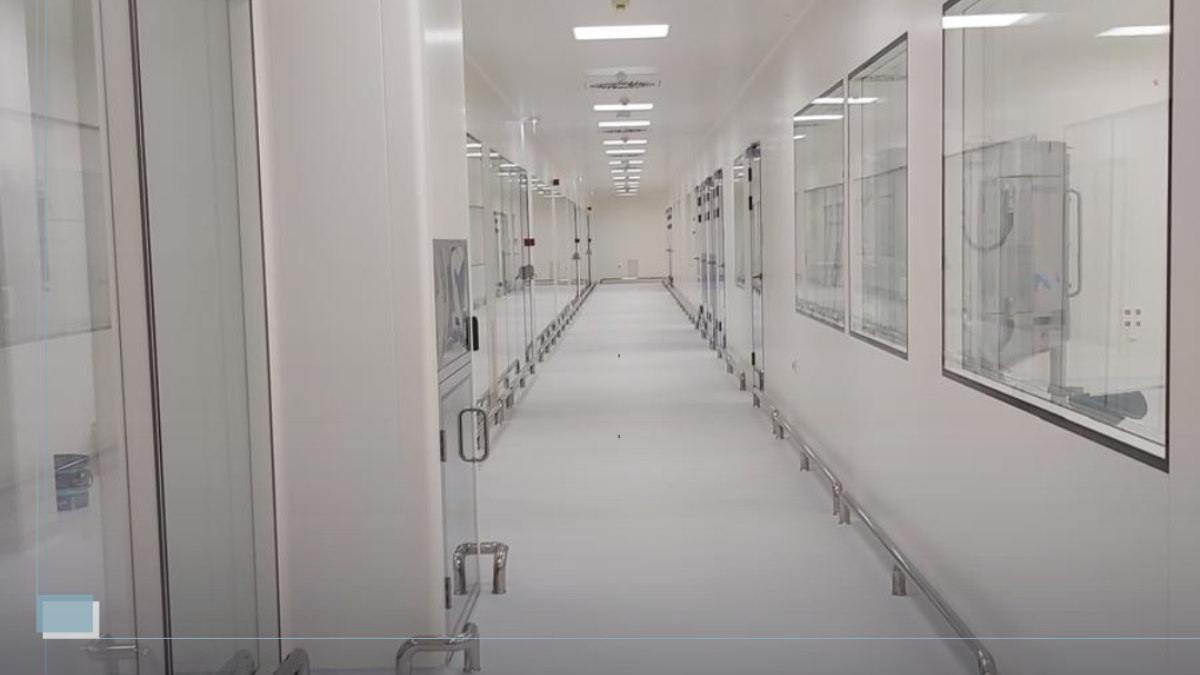
Biotech innovation has never moved faster. From advanced therapies to precision biologics, scientific progress is accelerating at an unprecedented pace. Yet one critical element often lags behind: infrastructure.
At NAYA Life Sciences, we see this disconnect every day. Groundbreaking science is ready to scale — but facilities are not. And in a sector where funding, regulatory milestones, and competitive positioning are tightly linked to time, infrastructure delays are more than operational setbacks. They are strategic risks.
Modular cleanroom systems are not simply an alternative construction method. They are a strategic tool for accelerating biotech growth.
Infrastructure as Strategy — Not Just Construction
For early-stage and scaling biotech companies, cleanrooms are often viewed as a necessary technical requirement: something to build once the science is validated.
But infrastructure decisions shape:
- Time-to-clinic
- Capital efficiency
- Regulatory readiness
- Investor confidence
- Long-term scalability
Traditional construction models were not designed for today’s biotech reality. Linear timelines, fragmented contractor structures, and unpredictable on-site variables create uncertainty that startups cannot afford.
At NAYA Life Sciences, we advocate a different mindset: infrastructure should move at the speed of innovation.
Industrialized Cleanroom Delivery: Precision Over Improvisation
Modular cleanroom systems bring manufacturing discipline into facility development.
Instead of assembling systems piece by piece under variable site conditions, core components are:
- Engineered in advance
- Manufactured in controlled environments
- Quality-checked before delivery
- Rapidly assembled on site
This industrialized approach reduces variability and enhances predictability. More importantly, it enables parallel workflows — allowing facility development to progress simultaneously with regulatory planning and process development.
For biotech startups operating under milestone-driven financing, parallelization is transformative. It compresses timelines without compromising compliance.
Accelerating GMP Readiness with Confidence
The transition from R&D to GMP manufacturing is one of the most critical phases in a biotech company’s lifecycle. It demands precision, documentation, and strict environmental control.
Modular cleanroom systems designed for pharmaceutical applications are built with regulatory frameworks such as EU GMP Annex 1 and FDA expectations in mind. Material selection, airflow concepts, surface finishes, and integration strategies are aligned from the outset with validation requirements. This proactive design philosophy reduces friction during qualification phases (IQ/OQ/PQ) and shortens the path to operational readiness.
At NAYA Life Sciences, we view compliance not as a final checkpoint — but as a design principle embedded from day one.
Protecting Capital While Preserving Agility
Biotech startups must balance ambition with financial discipline. Traditional builds frequently introduce change orders, timeline overruns, and cost escalations — eroding valuable runway.
Modular systems provide:
- Defined scope
- Controlled production conditions
- Reduced on-site labor time
- Clear installation interfaces
The result is greater budget transparency and reduced risk exposure. Equally important is adaptability. As clinical programs evolve, manufacturing needs shift. Modular cleanroom environments can be expanded, reconfigured, or upgraded without full facility demolition. Infrastructure becomes scalable rather than restrictive.
For growing biotech companies, this flexibility preserves early investments and supports long-term growth strategies.
Enabling Faster Speed-to-Market
In biotech, time is not abstract. It determines:
- When clinical trials begin
- When partnerships are signed
- When revenue generation becomes possible
- When patients gain access to innovation
If infrastructure timelines can be reduced by even six to nine months, the impact is significant. Earlier data generation strengthens fundraising positions. Accelerated clinical readiness enhances strategic leverage.
Speed-to-market is not only about being first — it is about reducing uncertainty and creating momentum. Modular cleanroom systems directly contribute to that momentum.
A Sustainable and Forward-Looking Approach
Beyond speed and scalability, modular construction aligns with broader sustainability and lifecycle considerations.
Controlled manufacturing environments reduce material waste. Systems can be adapted rather than demolished. Future expansions require less disruption and fewer resources.
For biotech companies increasingly mindful of ESG considerations and sustainable growth, modular infrastructure supports responsible development without sacrificing performance.
The NAYA Perspective
At NAYA Life Sciences, we believe cleanroom infrastructure should empower innovation — not slow it down.
Our approach to modular cleanroom systems is rooted in three principles:
- Precision — engineering rigor and compliance-driven design
- Speed — parallel processes that accelerate delivery
- Flexibility — scalable systems that grow with our clients
We do not see cleanrooms as static structures. We see them as dynamic platforms enabling scientific progress.
As biotech continues to redefine the boundaries of medicine, infrastructure must evolve in parallel. Modular cleanroom systems are not just a construction solution — they are a strategic enabler of faster, smarter, and more resilient biotech growth.