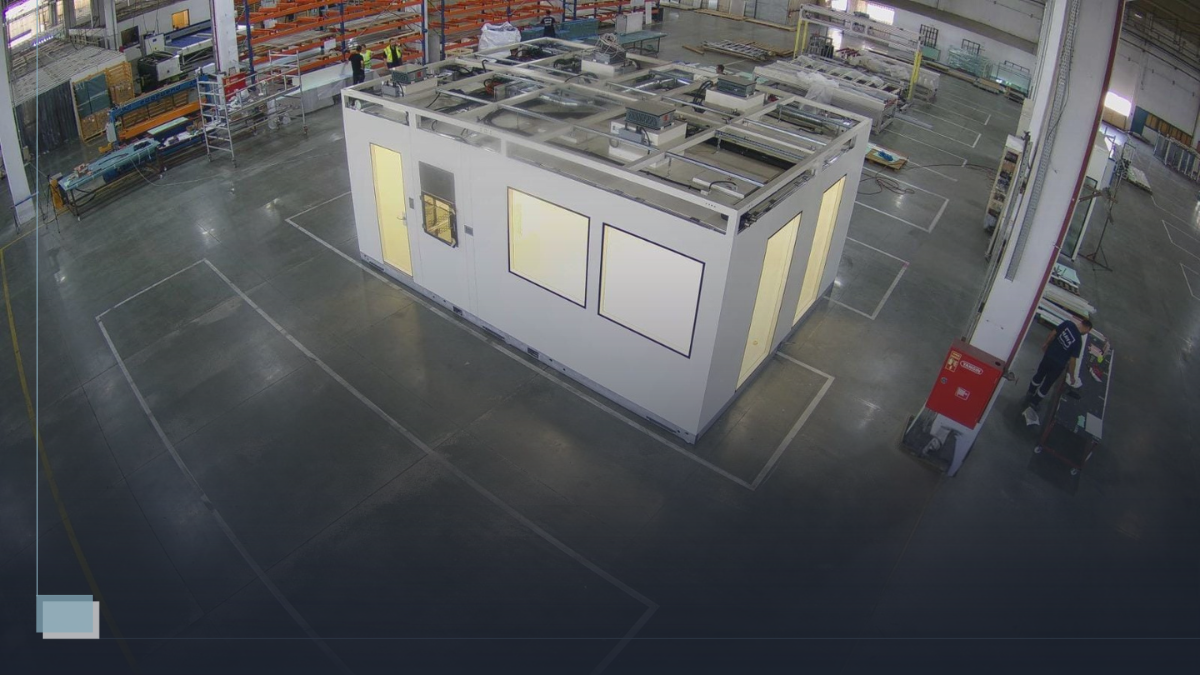
In life sciences, cleanrooms are the foundation of safe and compliant production. From pharmaceuticals to advanced therapies, these highly controlled environments are essential for ensuring quality and precision. However, behind their critical role lies a growing challenge: traditional cleanrooms are often not designed with sustainability in mind.
At NAYA Life Sciences (NAYA LS), the focus is shifting toward smarter, more sustainable solutions—particularly through modular cleanrooms that support circular infrastructure.
As the industry evolves, a new and important question is emerging: Can Cleanrooms Become Circular?
What Circular Design Means for Cleanrooms?
Circular design is based on a simple principle: reduce waste and maximize reuse. Instead of following a linear model—build, use, demolish—circular infrastructure is designed to extend lifecycle value and minimize environmental impact.
In the context of cleanrooms, this means moving away from fixed, single-use facilities and toward adaptable environments that can evolve over time.
Modular cleanrooms play a key role in this transformation. They are designed as flexible systems that can be:
- Reconfigured as production needs change
- Disassembled without damaging core components
- Reused across multiple projects or locations
This approach allows cleanrooms to become long-term assets rather than one-time investments.
The Limitations of Traditional Cleanrooms
Traditional cleanrooms have been the industry standard for decades, but their limitations are becoming increasingly clear.
First, they are resource-intensive. Conventional construction relies on permanent materials and systems that are not intended for reuse. Once installed, these structures are difficult to modify without major reconstruction.
Second, traditional cleanrooms lack flexibility. As production requirements evolve—whether due to new therapies, changing processes, or scaling needs—facilities often struggle to keep up. Even small adjustments can result in costly downtime and redesign.
Finally, there is a significant issue of waste generation. When cleanrooms are decommissioned or upgraded, much of the infrastructure cannot be reused, leading to unnecessary material waste and additional costs.
For companies seeking agility and sustainability, this model is no longer optimal.
Modular Cleanrooms: A Smarter, Circular Approach
Modular cleanrooms offer a fundamentally different solution—one that aligns with both operational efficiency and sustainability goals.
At NAYA LS, modular cleanrooms are engineered as reconfigurable systems, enabling companies to build smarter and adapt faster.
Reusability Built Into the Design
Unlike traditional cleanrooms, modular systems are designed for disassembly. Key components such as wall panels, ceilings, and structural elements can be reused multiple times without compromising performance.
This transforms cleanrooms into reusable infrastructure, reducing the need for new materials and lowering environmental impact.
Scalable Cleanrooms Without Overbuilding
One of the biggest advantages of modular cleanrooms is scalability. Instead of building oversized facilities to anticipate future needs, companies can start with the capacity they require and expand as needed.
This approach:
- Reduces upfront investment
- Eliminates unused space
- Minimizes resource waste
With modular cleanrooms, growth becomes efficient and controlled.
Lower Environmental Impact During Construction
Off-site prefabrication is a key feature of modular cleanrooms. By manufacturing components in controlled environments, companies can significantly reduce construction waste and improve material efficiency.
Compared to traditional cleanrooms, this results in:
- Less on-site disruption
- Reduced energy consumption during construction
- More sustainable use of resources
Long-Term Value for Cleanroom Infrastructure
Modular cleanrooms are not just faster to deploy—they are designed to deliver long-term value. Facilities can be reconfigured, relocated, or upgraded as needed, ensuring they remain relevant over time.
For companies working in fast-changing industries, this flexibility is essential.
Modular Cleanrooms: Where Sustainability Meets Speed
A common misconception is that sustainability slows down projects. In reality, modular cleanrooms offer both environmental and operational advantages.
Compared to traditional cleanrooms, modular solutions enable:
- Faster project timelines
- Reduced material waste
- More efficient construction processes
This means companies can meet production deadlines while also achieving sustainability goals.
Why Circular Cleanrooms Matter Today?
The demand for more flexible and sustainable cleanrooms is being driven by several industry trends:
- The growth of advanced therapies requiring adaptable environments
- Increasing ESG expectations across pharma and biotech
- The need to reduce capital risk and improve efficiency
- A shift toward agile and decentralized manufacturing
In this landscape, modular cleanrooms are becoming a strategic solution rather than an alternative option.
Where Cleanroom Design Is Headed?
The future of cleanrooms lies in adaptability. Facilities must be able to evolve alongside the processes they support.
With modular cleanrooms, companies can:
- Scale operations as needed
- Reconfigure layouts quickly
- Relocate infrastructure when required
- Reduce environmental impact
At NAYA Life Sciences, this vision is already being implemented—delivering cleanroom solutions that combine flexibility, speed, and sustainability.
Final Thought
The shift toward circular infrastructure is redefining how cleanrooms are designed and used.
Instead of static, one-time builds, the industry is moving toward modular cleanrooms that can adapt, evolve, and be reused over time.
For companies looking to stay competitive, sustainable, and efficient, the question is no longer whether to adopt modular solutions—but how quickly they can make the transition.