A modular cleanroom may arrive on site looking close to a finished facility, but a significant amount of work has already taken place before installation begins—and important verification still needs to happen before the cleanroom can become operational.
For pharmaceutical, biotechnology and other controlled-environment projects, the journey from Factory Acceptance Testing (FAT) to Site Acceptance Testing (SAT) is an important part of ensuring that the delivered cleanroom meets the agreed design requirements and is ready for the next stages of commissioning and qualification.
So, what actually happens between factory production and a cleanroom going live?
1. Before FAT: Design and Manufacturing
Long before FAT takes place, the cleanroom has progressed through several critical stages.
The process typically begins by translating the user’s process and operational requirements into an engineered cleanroom solution. Depending on the project, this can include defining:
- cleanroom classification and environmental requirements;
- room layouts and personnel and material flows;
- pressure cascades;
- HVAC requirements;
- wall, ceiling, door and flooring systems;
- utilities and equipment interfaces;
- electrical and control systems;
- maintenance access; and
- requirements for future modification or expansion.
Once the design has been approved, manufacturing can begin.
One of the major advantages of modular construction is that a substantial portion of the cleanroom can be manufactured and prepared in a controlled factory environment rather than constructed entirely at the final site.
This provides an important opportunity: the cleanroom and its components can be inspected and tested before they are shipped to the customer.
2. FAT: Testing Before the Cleanroom Leaves the Factory
Factory Acceptance Testing (FAT) is performed before shipment to verify that the manufactured solution corresponds to the agreed specifications and project documentation.
The exact FAT scope depends on the project, system boundaries and customer requirements. It may include visual and dimensional inspections, verification of materials and finishes, checks of doors and other components, electrical or control-system testing, and confirmation that relevant documentation is complete.
For modular cleanrooms, FAT is particularly valuable because potential issues can be identified while the system is still in the factory environment.
Correcting an issue before shipment is generally much simpler than discovering it after the cleanroom has arrived on site and installation activities are already underway.
FAT therefore represents more than a final inspection. It is an important quality checkpoint between manufacturing and site installation.
3. Documentation and Approval
Documentation is an essential part of a cleanroom project, particularly in regulated industries.
The documentation package associated with FAT and handover to the next project stage will vary depending on the agreed scope, but may include drawings, component information, inspection and test records, certificates and other relevant technical documentation.
Any observations identified during FAT should also be documented and addressed according to the agreed project procedures.
Once the required FAT activities have been successfully completed and the system is accepted for shipment, preparations for transportation can begin.
4. From Factory to Site
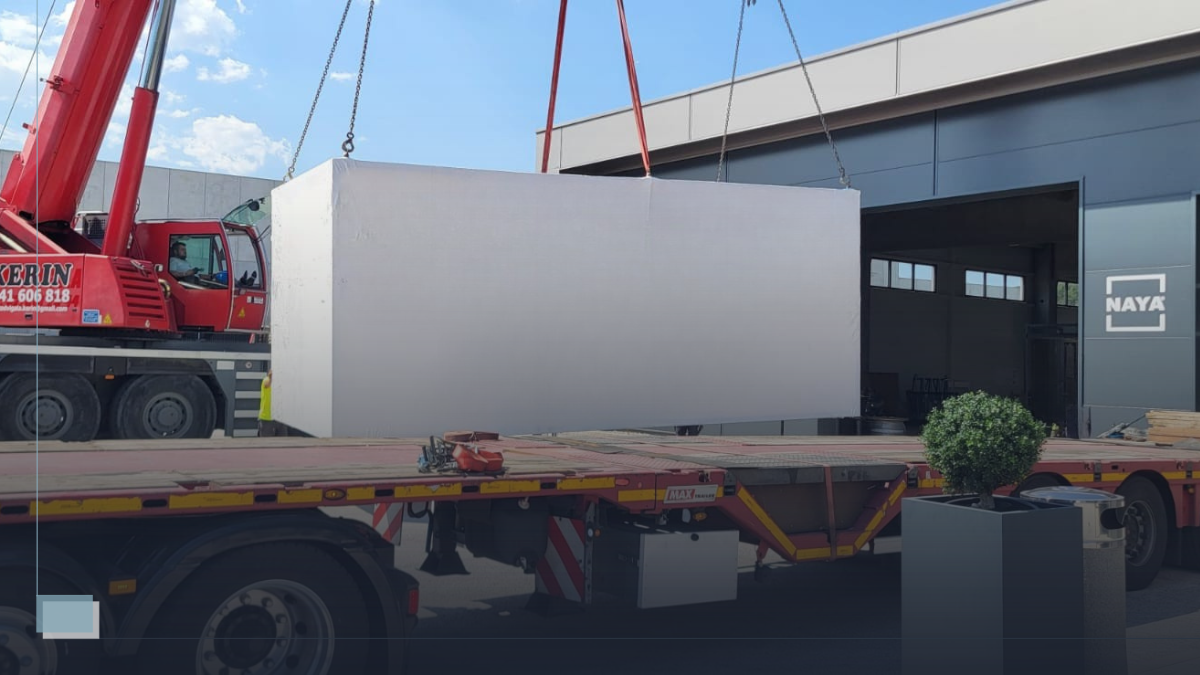
Once FAT has been successfully completed and the cleanroom is released for shipment, the project enters another important phase: moving the system safely and efficiently from the controlled factory environment to the installation site.
For a modular cleanroom, transportation is not simply a logistics exercise. The modules and components have already been manufactured according to defined specifications and, where applicable, inspected or tested during FAT. They therefore need to be carefully prepared, protected and handled to preserve their condition throughout transport.
Preparing the Cleanroom for Shipment
Before dispatch, modules and individual components are prepared and packaged according to their size, sensitivity and transportation requirements. Particular attention may be given to protecting finished surfaces, doors, glazing, electrical components, control equipment and other elements that could be affected by movement, moisture, dust or mechanical damage during transport.
Components should also be clearly identified to support efficient unloading and installation once they reach the site. Good labelling and an organised packing sequence can make a significant difference during installation, particularly on larger projects involving numerous modules and components.
Is the Site Ready?
While the cleanroom is being prepared for transport, work at the final location should be progressing in parallel.
Before the modules arrive, the installation area needs to be ready to receive them. Depending on the project, this may include confirming that structural works are complete, access routes are available, installation areas are clear and relevant building services and utility interfaces are prepared.
The project team should also verify practical questions such as: Can the modules physically reach the installation area? Is there sufficient space for unloading and temporary storage? Are lifting and handling arrangements in place? Are the necessary interfaces ready for connection?
Identifying these issues before delivery helps prevent a situation in which the cleanroom arrives on schedule but installation cannot begin.
5. Installation and Integration
Once delivered, the cleanroom moves from a manufactured system to an integrated part of the customer’s facility.
Depending on the project scope, installation can include assembling modular walls and ceilings, installing doors and glazing, completing flooring interfaces, connecting electrical and control systems, integrating HVAC and utilities, and coordinating interfaces with process equipment and the surrounding building.
This is where one of the strengths of modular cleanroom construction becomes particularly visible.
Because many components have already been engineered and manufactured before reaching the site, on-site activities can be more structured and predictable than with a cleanroom constructed predominantly through conventional methods.
However, successful installation still depends heavily on accurate design, good interface management and coordination between different disciplines.
6. SAT: Verifying the Cleanroom at Its Final Location
After installation and connection of the relevant systems, the project moves towards Site Acceptance Testing (SAT).
While FAT verifies the solution before it leaves the factory, SAT confirms that the installed system performs as intended in its actual operating environment and that transportation, installation and integration have not introduced issues.
The SAT scope again depends on the specific project and agreed requirements. It can include verification of installation against approved documentation, inspection of components and finishes, functional testing, checking electrical and control interfaces, and confirming that systems operate correctly following site integration.
Any deviations or outstanding items identified during SAT are documented and addressed before final acceptance according to the agreed project process.
FAT and SAT therefore serve complementary purposes:
FAT asks: Did we manufacture the agreed solution correctly?
SAT asks: Has that solution been installed and integrated correctly at the customer’s site?
7. SAT Is Not the Same as Qualification
One important distinction is that successful SAT does not automatically mean that a cleanroom is qualified for GMP operation.
FAT and SAT are acceptance-testing activities, while commissioning and qualification provide documented evidence that systems have been installed correctly and perform according to their intended requirements.
Depending on the facility and regulatory requirements, subsequent activities may include commissioning and qualification activities such as Installation Qualification (IQ) and Operational Qualification (OQ), alongside cleanroom performance testing.
Testing may include parameters such as airflow, pressure differentials, HEPA filter integrity, temperature and humidity, recovery performance and airborne particle concentrations, depending on the cleanroom classification and project requirements.
The exact qualification strategy should always be defined according to the intended use of the facility, applicable standards, regulatory expectations and the customer’s validation approach.
8. Why Thinking About FAT and SAT Early Matters
FAT and SAT should not be treated as activities that are considered only when manufacturing is almost complete.
Their requirements should be discussed much earlier in the project.
Defining acceptance criteria, responsibilities, testing scope and required documentation during the design phase creates a clearer path from engineering to manufacturing, installation and qualification.
This is particularly important for modular cleanrooms, where design, manufacturing and site preparation can progress in parallel.
When these activities are properly coordinated, modular construction can help reduce on-site work and provide greater predictability around installation and project schedules.
From Module to Operational Cleanroom
A cleanroom does not become operational the moment the last panel is installed.
The path from factory to functioning controlled environment involves a series of planned steps—manufacturing, FAT, shipment, installation, SAT, commissioning and qualification—each providing another level of confidence that the facility has been delivered according to its intended requirements.
At NAYA Life Sciences, we approach modular cleanroom projects with the complete lifecycle in mind. From early engineering and manufacturing through installation and the transition towards commissioning and qualification, careful coordination between each stage helps create cleanroom facilities that are not only faster to deploy, but also designed for reliable long-term operation.
Planning a new modular cleanroom or expanding an existing facility? Contact NAYA Life Sciences to discuss how a modular approach can support your project’s technical, operational and timeline requirements.